





Braze Inc. is a cloud-based customer engagement platform that helps brands orchestrate personalized, real-time messaging across mobile, web, email, SMS, and in-app channels. Founded in 2011, the company focuses on data-driven engagement rather than legacy CRM workflows, positioning itself as infrastructure for modern consumer-first brands. Braze generated approximately $560 million in revenue in fiscal 2025, growing north of 25% year over year despite a tighter enterprise IT spending environment. The company is headquartered in New York City and serves large consumer brands across retail, media, fintech, travel, and on-demand services. Its closest competitors include Salesforce Marketing Cloud, Adobe Experience Platform, and HubSpot, though Braze is more narrowly focused and technically opinionated.
Most Recent Earnings Performance
Braze reported its most recent earnings in early December 2025 for fiscal Q3 2026, delivering revenue of roughly $155 million, up about 15% year over year and modestly ahead of Street expectations. Adjusted EPS came in positive at approximately $0.02, compared to a loss in the year-ago quarter, marking an important psychological milestone even if profitability remains thin. Management guided next-quarter revenue in the $160–163 million range, slightly above consensus, while full-year guidance implied mid-teens growth as customers continue to rationalize software spend. The market reaction was constructive but restrained, reflecting confidence in execution rather than multiple expansion euphoria.
Founding and Early History
Braze was founded in 2011 by Bill Magnuson, Jon Hyman, and Mark Ghermezian, originally under the name Appboy, with the explicit goal of solving mobile-first customer engagement. The founders identified early that mobile apps required fundamentally different data models and real-time decisioning than email-centric marketing automation tools. Early funding came from venture firms including Accel and ICONIQ, allowing the company to scale enterprise-grade infrastructure well before profitability was fashionable. The company rebranded to Braze in 2017 as its platform expanded beyond mobile into omnichannel engagement.
Product Evolution and Platform Depth
At its core, Braze provides a real-time customer profile built on streaming behavioral data rather than batch-based CRM updates. The platform enables marketers and growth teams to trigger personalized campaigns based on live user behavior, location, device, and historical engagement. Over time, Braze has layered in experimentation, journey orchestration, AI-assisted personalization, and deep integrations with data warehouses like Snowflake. This architecture has made Braze particularly sticky among digital-native brands with high event volumes and complex engagement logic.
Customer Base and Go-To-Market
Braze primarily sells to mid-market and enterprise B2C companies, with strong penetration in media streaming, e-commerce, fintech, and gaming. Customers include well-known consumer brands that care deeply about lifecycle engagement rather than one-off campaigns. The go-to-market motion is enterprise-led, with multi-year contracts and usage-based expansion tied to message volume and active users. This model supports durable net revenue retention, historically above 110%, even as new logo growth moderates.
Competitive Landscape
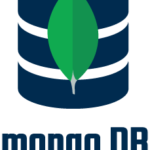
Braze competes most directly with Salesforce Marketing Cloud and Adobe’s Experience Platform, both of which offer broader but heavier-weight marketing suites. HubSpot competes at the lower end of the market, while Twilio Segment overlaps on data plumbing rather than orchestration. Braze’s advantage is focus: it does one thing extremely well and avoids the complexity tax that comes with all-in-one marketing clouds. The trade-off is narrower TAM relative to platform vendors with CRM adjacency.
Market Opportunity and Industry Growth
The customer engagement and marketing automation market is estimated to exceed $30 billion today, with long-term growth driven by mobile usage, personalization expectations, and first-party data strategies. Industry forecasts suggest a high-single-digit to low-double-digit CAGR through 2030 as brands shift spend from acquisition to retention. Braze is well positioned for this shift, as its value proposition aligns with maximizing lifetime value rather than lead generation. However, macro sensitivity remains, as engagement tooling is still scrutinized during budget cuts.
Differentiation and Strategic Moat
Braze’s key differentiation is its real-time data architecture and developer-friendly design, which allows companies to treat engagement as a product capability rather than a marketing afterthought. Unlike legacy tools that rely on nightly data syncs, Braze processes events in milliseconds, enabling contextual messaging that feels native to users. This technical depth creates high switching costs once embedded into core user flows. In plain terms, ripping out Braze is painful, which investors generally like.
Management Team Overview
Braze is led by co-founder and CEO Bill Magnuson, who has remained deeply involved in product and platform strategy since inception. CFO Isabelle Winkles brings public-market discipline and has focused on balancing growth with margin expansion post-IPO. The leadership team skews product- and engineering-centric rather than sales-heavy, which is reflected in the company’s platform depth and relatively measured go-to-market expansion.
Five-Year Financial Performance
Over the past five fiscal years, Braze has grown revenue from roughly $150 million to over $560 million, representing a compound annual growth rate in the high 20% range. Growth has decelerated from earlier hypergrowth years but remains healthy given the company’s scale and enterprise focus. Gross margins have consistently hovered in the mid-60% range, reflecting efficient cloud infrastructure relative to peers. Operating losses have narrowed materially as sales efficiency improves and R&D spend normalizes as a percentage of revenue.
Profitability Trajectory and Balance Sheet
While Braze is not meaningfully profitable on a GAAP basis, adjusted operating margins have steadily improved, and the company has flirted with breakeven quarters. Cash and short-term investments remain north of $450 million, giving the company ample runway without dilution. There is minimal debt on the balance sheet, which reduces financial risk in a higher-rate environment. The story here is discipline, not blitzscaling.
Bull Case for the Stock
The bull case rests on Braze becoming the de facto engagement layer for consumer internet brands, with durable net retention and steady margin expansion. If growth re-accelerates modestly as macro pressure eases, operating leverage could surprise to the upside. In that scenario, the market may reward Braze with a higher multiple as a “quality compounder” rather than a speculative SaaS name.
Bear Case for the Stock
The bear case is that customer engagement tooling becomes increasingly commoditized as data warehouses and AI-native tools absorb more functionality. Larger platforms like Salesforce or Adobe could bundle aggressively, pressuring pricing and growth. If revenue growth slips into low teens without clear margin inflection, the stock risks becoming valuation dead weight.
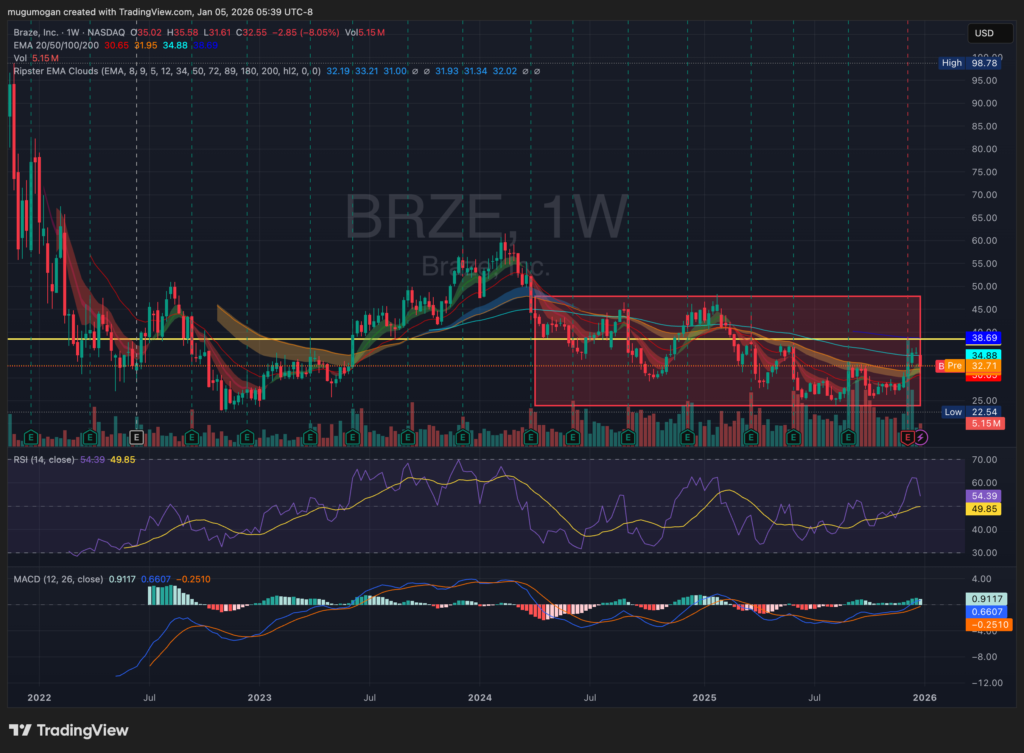
The stock is in a stage 1 consolidation on the weekly and the daily chart with the near term move lower to the $29 range where it could reverse. We are not buyers yet.